


Introduction
Have you ever stumbled upon the term Rosebud Pokémon and wondered what it means? Whether you’re a longtime Pokémon fan or just beginning your journey into this colorful world, this article is designed to walk you through everything you need to know about this enchanting creature. Think of it like peeling back the petals of a rose—each layer revealing more beauty and meaning.
Pokémon has been a cultural icon for decades, and with hundreds of creatures to explore, the Rosebud Pokémon stands out for its elegance, uniqueness, and gameplay value. In this article, we’ll uncover its origins, abilities, evolution, and much more.
So, are you ready to discover the delicate charm and powerful potential of the Rosebud Pokémon?
Table of Contents
| Sr# | Headings |
|---|---|
| 1 | What Is a Rosebud Pokémon? |
| 2 | The Origins and Inspiration Behind the Rosebud Pokémon |
| 3 | Meet Budew: The First Stage of the Rosebud Pokémon Line |
| 4 | Roselia: A Blooming Force in Battle |
| 5 | Roserade: The Final Form and Its Potency |
| 6 | Type and Strengths: Understanding Battle Advantages |
| 7 | Moves and Abilities: Strategic Gameplay |
| 8 | How to Evolve Budew into Roselia and Roserade |
| 9 | Where to Find Rosebud Pokémon in Games |
| 10 | Rosebud Pokémon in the Anime and Lore |
| 11 | Best Battle Tactics with Roserade |
| 12 | Comparing Rosebud Pokémon to Other Grass/Poison Types |
| 13 | Fun Facts and Trivia about Rosebud Pokémon |
| 14 | Cultural Impact and Fan Love |
| 15 | Final Thoughts: Why Rosebud Pokémon Deserves the Spotlight |
1. What Is a Rosebud Pokémon?
The term Rosebud Pokémon generally refers to Budew, the tiny and adorable Pokémon introduced in Generation IV (Sinnoh Region), and its evolved forms Roselia and Roserade. This evolutionary line is known for its floral appearance and strong Grass/Poison typing.
The “rosebud” part isn’t just cute branding—it genuinely captures the creature’s design and personality. Imagine a baby rose getting ready to bloom; that’s Budew in a nutshell.
2. The Origins and Inspiration Behind the Rosebud Pokémon
The Rosebud Pokémon line is inspired by real-life roses, a symbol of beauty, delicacy, and sometimes, hidden danger. Budew resembles a flower bud, Roselia looks like a blossoming rose with a bouquet for arms, and Roserade appears like a full-grown flower with a touch of mystery and elegance.
In Japanese culture, flowers often symbolize deeper meanings—just like how this Pokémon hides immense power behind its gentle look.
3. Meet Budew: The First Stage of the Rosebud Pokémon Line

Budew is a tiny Pokémon with a big role. As the baby form, it’s often underestimated. However, it has key abilities like Natural Cure and Poison Point, making it useful even in early gameplay.
Budew evolves through friendship during the day, which adds a unique emotional layer to its growth. You can’t just grind it out—you have to genuinely take care of it, like a real plant!
4. Roselia: A Blooming Force in Battle
Once Budew evolves, you get Roselia, a lovely dual-type Pokémon. Roselia gains access to more powerful status-inducing moves like Toxic, Stun Spore, and Leech Seed, making it a strong support player in any team.
Despite its beauty, Roselia can sting. With high Special Attack and surprisingly decent Speed, it’s more than just a pretty face.
5. Roserade: The Final Form and Its Potency
Roserade, the final evolution in its line, blossoms into a fierce contender in competitive battles—graceful in design yet formidable in power, brought to life through the use of a Shiny Stone.
Roserade excels at special attacks, with moves like Sludge Bomb, Giga Drain, and Leaf Storm. It’s like a beautiful assassin—graceful yet lethal.
6. Type and Strengths: Understanding Battle Advantages
With its dual Grass/Poison typing, the Rosebud Pokémon line boasts a distinct edge in battles, blending nature’s resilience with toxic precision.
-
Strengths Against: Water, Fairy, Rock, and Ground types.
-
Weaknesses: Fire, Psychic, Ice, and Flying types.
Thanks to its Poison typing, it’s a natural counter to Fairy-types, which are otherwise tricky.
7. Moves and Abilities: Strategic Gameplay
Here’s where the fun begins. The Rosebud Pokémon line can learn a wide variety of status and special moves:
-
Stun Spore – Paralyzes enemies
-
Toxic Spikes – Sets up traps for opponents
-
Energy Ball – A strong Grass-type move
-
Extrasensory – For dealing with Poison-types
Their abilities, like Technician (Roserade’s Hidden Ability), boost weaker moves, making even simple attacks powerful.
8. The Blooming Journey: Evolving Budew into Roselia and Roserade
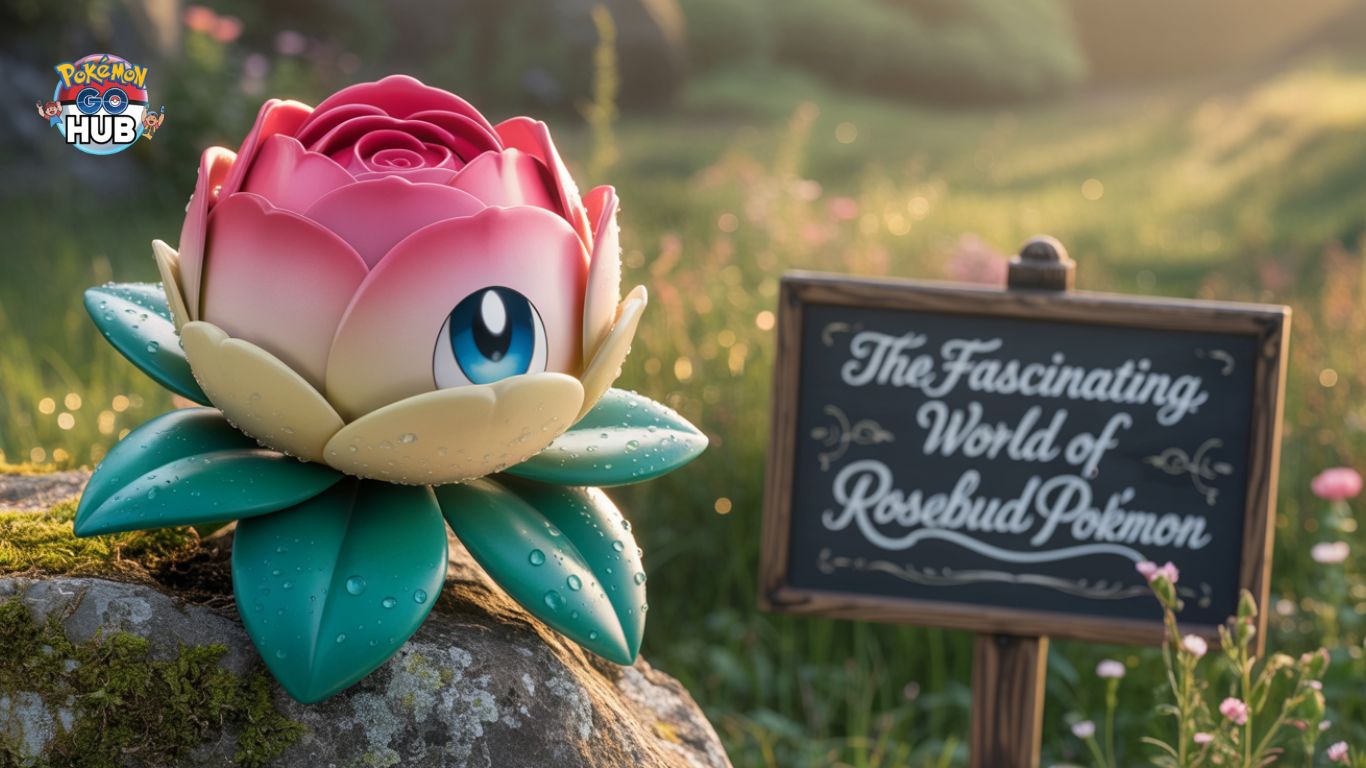
The evolution process is simple yet unique:
-
To evolve Budew into Roselia, nurture its friendship and let it grow during the daylight hours—only then will it bloom into its next form.
-
To evolve Roselia into Roserade, use a Shiny Stone—a radiant evolutionary item scattered across various Pokémon games, unlocking its full potential.
It mirrors real-life plant growth—from nurturing a bud to full bloom.
9. Where to Find Rosebud Pokémon in Games
You can find Budew and Roselia in multiple games:
-
Pokémon Diamond, Pearl, and Platinum: Routes near Eterna City
-
In Pokémon Sword and Shield’s Isle of Armor, Budew can be found gracefully appearing during clear weather conditions.
-
Pokémon GO: Often appears during flower-themed events
They’re not ultra-rare, but catching a strong one takes some patience and luck.
10. Rosebud Pokémon in the Anime and Lore
Roselia and Roserade have made several appearances in the Pokémon anime. Notably, Drew, a rival of May, uses a Roselia in Pokémon Advanced Generation. Roserade makes a striking appearance alongside Gardenia, the Eterna Gym Leader, perfectly embodying both elegance and formidable power in battle.
They often represent a blend of refined elegance and tactical prowess, standing out more for their strategy than sheer strength.
11. Best Battle Tactics with Roserade
In battle, Roserade shines with moves that wear down and outmaneuver the opponent. Here are some tried-and-true tactics:
-
Lead Role: Use Toxic Spikes to disrupt enemy strategy.
-
Special Attacker: Focus on maximizing EVs in Speed and Special Attack to unleash Roserade’s full offensive potential.
-
Status Inflicter: Combine Sleep Powder and Leech Seed.
Think of Roserade as a chess master—it wins through planning, not punching.
12. Comparing Rosebud Pokémon to Other Grass/Poison Types
Roserade holds its ground well compared to Pokémon like:
-
Venusaur: More tanky but slower.
-
Vileplume: Similar typing, but lacks Roserade’s speed and finesse.
-
Amoonguss: A defensive wall, but not a damage dealer.
Each has its niche, but Roserade is perfect for a fast, special attack-based strategy.
13. Fun Facts and Trivia about Rosebud Pokémon
-
Roselia’s roses change colors depending on gender.
-
Budew is one of the few baby Pokémon that can evolve through friendship and not leveling.
-
In some Pokédex entries, Roserade is described as using vines like whips—how cool is that?
These little touches make them memorable.
14. Cultural Impact and Fan Love
Fans adore the Rosebud line for its balance of beauty and strength. Roserade, especially, has inspired fan art, cosplay, and even tattoo designs. It’s like the floral equivalent of a ninja—silent, beautiful, and powerful.
Its presence in games like Pokémon Unite and GO keeps the fan base engaged and growing.
15. Final Thoughts: Why Rosebud Pokémon Deserves the Spotlight
In a world filled with dragons and electric rodents, the Rosebud Pokémon brings something refreshing—subtlety, grace, and strategic power. Whether you’re in it for aesthetics or battle prowess, this line delivers.
And just like a real rosebud, it reminds us that the smallest beginnings can bloom into something truly spectacular.
FAQs
1. How do I evolve Budew into Roselia?
Increase Budew’s friendship level and evolve it during the daytime.
2. What item do I need to evolve Roselia into Roserade?
Evolving Roselia into Roserade requires the use of a Shiny Stone, a key item that triggers its stunning transformation.
3. Is Roserade good for competitive play?
Yes, Roserade is a strong special attacker and is great for setting traps with Toxic Spikes.
4. What is the Rosebud Pokémon’s main strength in battles?
Its main strength lies in high Special Attack and a great move pool that includes status effects and elemental damage.
5. Can I catch Budew in Pokémon GO?
Yes, Budew appears during certain themed events and can also hatch from 5km eggs.

