


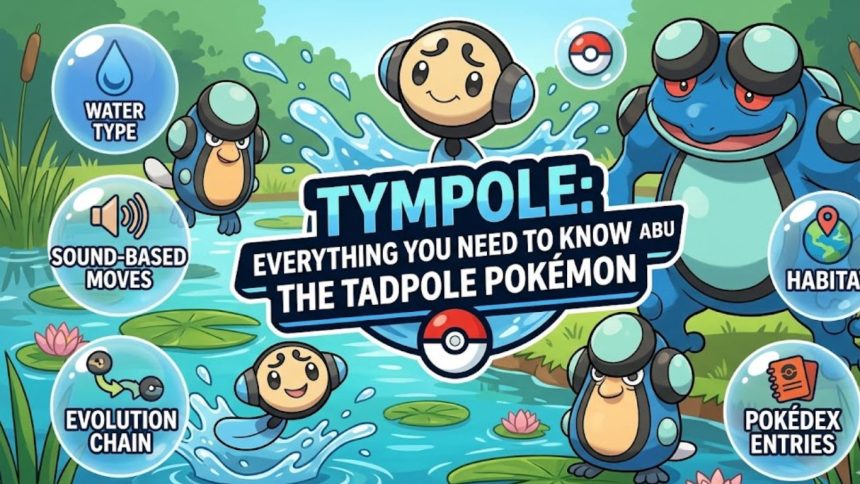
Pokémon come in all shapes and sizes, but few are as charming and unique as Tympole. At first glance, it may look like an ordinary tadpole with a cheerful smile, but this little Water-type creature hides plenty of interesting traits beneath the surface. Whether you’re a long-time Pokémon fan or someone just beginning your journey, Tympole offers an exciting blend of design, strategy, and lore.
Think of Tympole as the first note in a beautiful musical performance. Alone, it may seem simple, but as it evolves, it becomes part of something much bigger and more powerful. So, what makes this Pokémon stand out? Why do many trainers choose to add it to their teams?
Let’s dive deep into everything you should know about Tympole.
1. What Is Tympole?
Tympole first appeared in the fifth generation of the Pokémon series as a Water-type species known for its tadpole-inspired design and unique vibration abilities.
It debuted in the Unova region and quickly became recognizable because of the round bumps on its head that produce vibrations underwater.
Although it starts as a relatively small and weak Pokémon, Tympole has enormous growth potential. Many trainers catch it early and develop it into a formidable battler through evolution.
Its Pokédex entries describe how the vibrations from its cheeks can communicate with others and even confuse opponents.
2. Origin and Inspiration
Inspired by Tadpoles and Sound Waves
The design of Tympole appears to combine the appearance of a real tadpole with concepts related to music and vibration.
The circular organs on both sides of its head resemble speakers or drums, hinting at its ability to generate sound waves. Even its name blends “tympanum” (the eardrum) with “tadpole,” creating a clever reference to both hearing and amphibians.
This creative combination gives Tympole a memorable identity among hundreds of Pokémon species.
3. Physical Appearance

A Cute Yet Functional Design
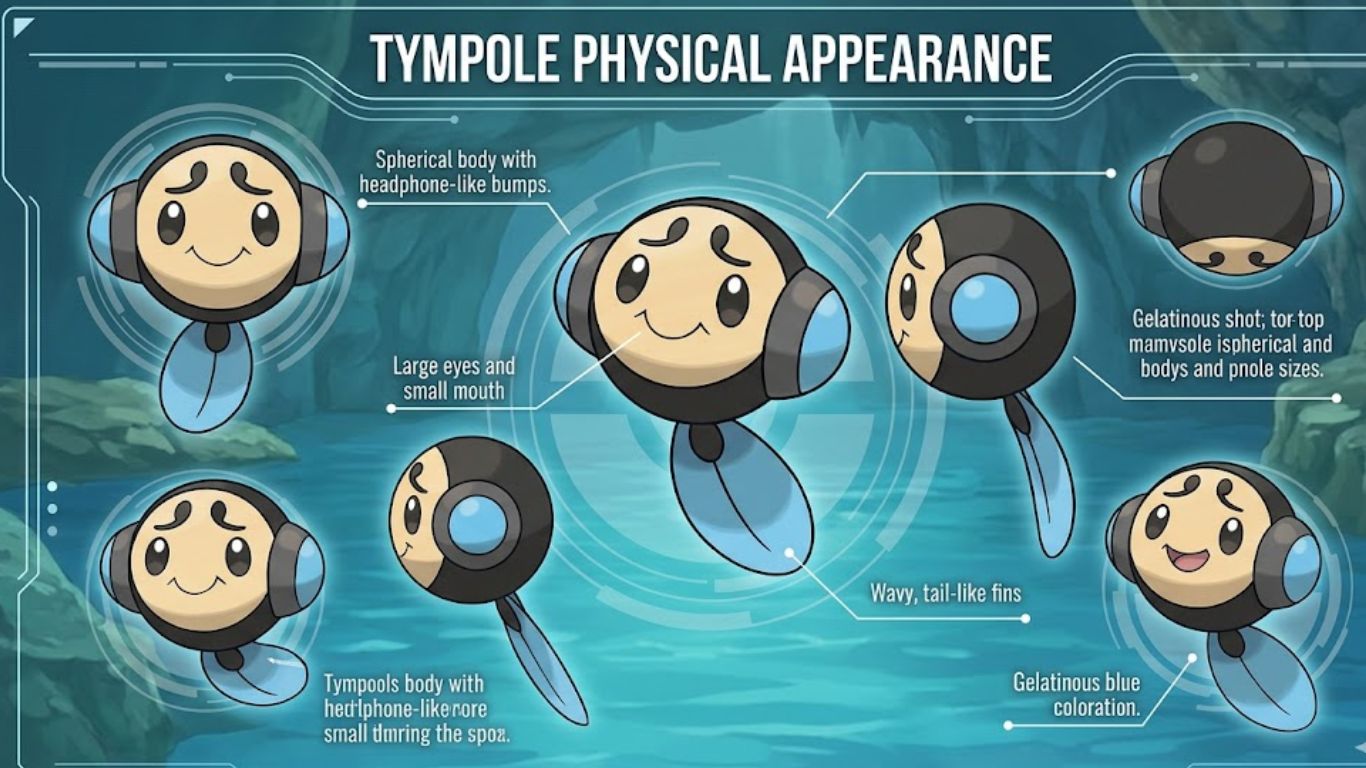
has a rounded blue body, black tail, and yellow circular bumps on each side of its face. It possesses large eyes and a constant cheerful expression that appeals to many fans.
Despite its simple appearance, every feature serves a purpose:
- Blue coloration helps it blend into water.
- Vibrating cheek organs produce communication signals.
- Long tail assists in swimming.
- Compact body allows quick movement.
Its design perfectly reflects both its aquatic lifestyle and musical inspiration.
4. Typing and Abilities
Water-Type Advantages
As a Water-type Pokémon, naturally resists Fire, Steel, Water, and Ice attacks.
Its common abilities include:
- Swift Swim – Doubles Speed during rain.
- Hydration – Removes status conditions in rain.
- Water Absorb (Hidden Ability) – Restores HP when hit by Water-type moves.
Among these, Water Absorb can make Tympole surprisingly durable in certain battles.
5. Evolution Line
From Tiny Tadpole to Powerful Warrior
evolves twice:
Tympole → Palpitoad → Seismitoad
At level 25, Tympole becomes Palpitoad.
At level 36, Palpitoad evolves into Seismitoad.
Each evolution increases its size, power, and versatility. By the final stage, Seismitoad becomes both Water and Ground type, eliminating its Electric weakness while gaining impressive offensive capabilities.
This progression makes raising especially rewarding.
6. Base Stats and Battle Performance
Early Game Utility
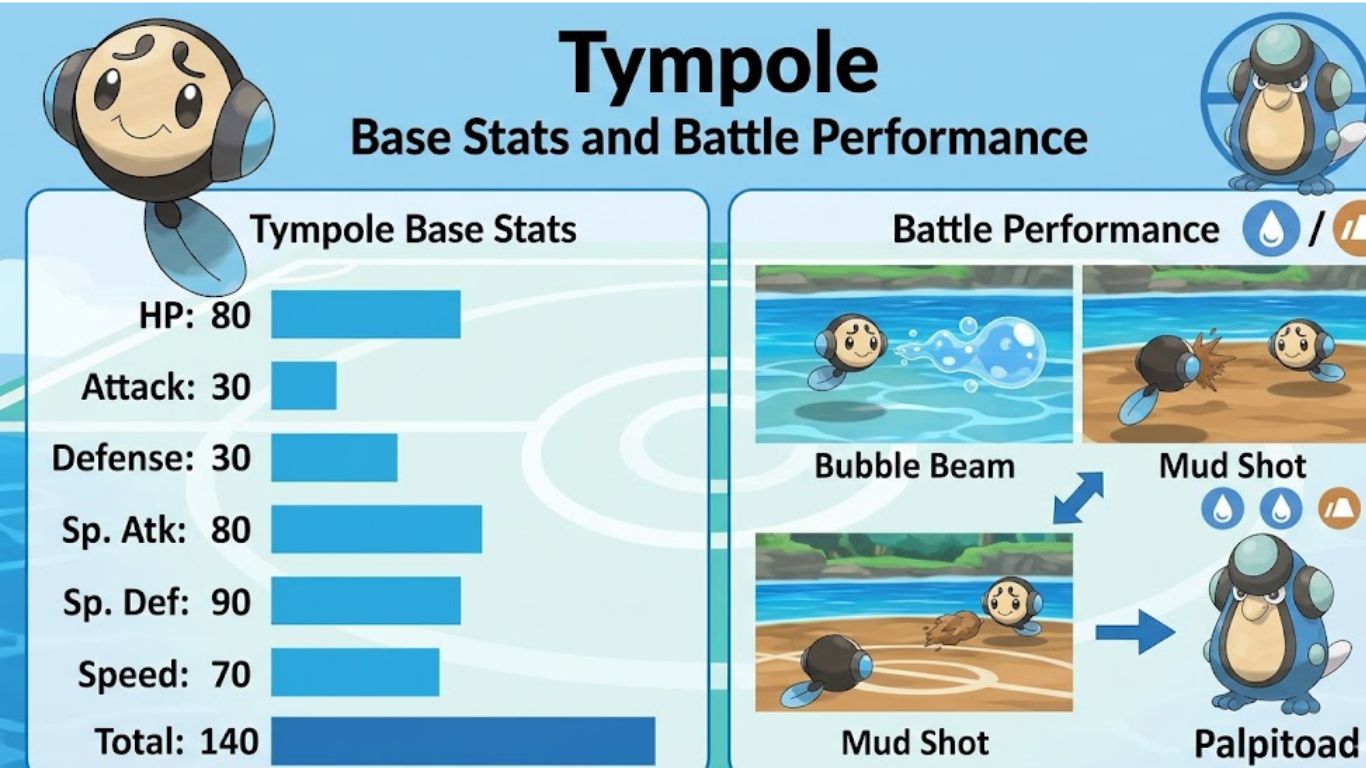
While Tympole isn’t the strongest Pokémon initially, its balanced stats make it reliable.
Key strengths include:
- Decent HP
- Respectable Speed for early gameplay
- Useful Special Attack
- Strong evolution potential
Its real value lies in future development rather than immediate dominance.
For players progressing through story mode, often serves as an excellent investment.
7. Best Moves and Strategies
Recommended Moves
Some effective attacks include:
- Water Pulse
- Bubble Beam
- Mud Shot
- Scald
- Earth Power
- Hydro Pump
- Sludge Wave
- Rain Dance
Combining Rain Dance with Swift Swim dramatically increases speed and offensive pressure.
Strategic Uses
Rain teams particularly benefit from Tympole and its evolutions. Once evolved into Seismitoad, it can threaten Electric-types while maintaining powerful Water attacks.
The Ground typing later provides valuable defensive utility.
8. Habitat and Locations
Where Can You Find Tympole?
Depending on the game version, is commonly found near:
- Rivers
- Marshes
- Lakes
- Swamps
- Ponds
- Wetlands
In games like Pokémon GO and other mainline titles, wet or rainy conditions can boost the appearance of Water-type Pokémon, giving players a better chance of encountering.
Many players discover it relatively early during their adventures.
9. Strengths and Weaknesses
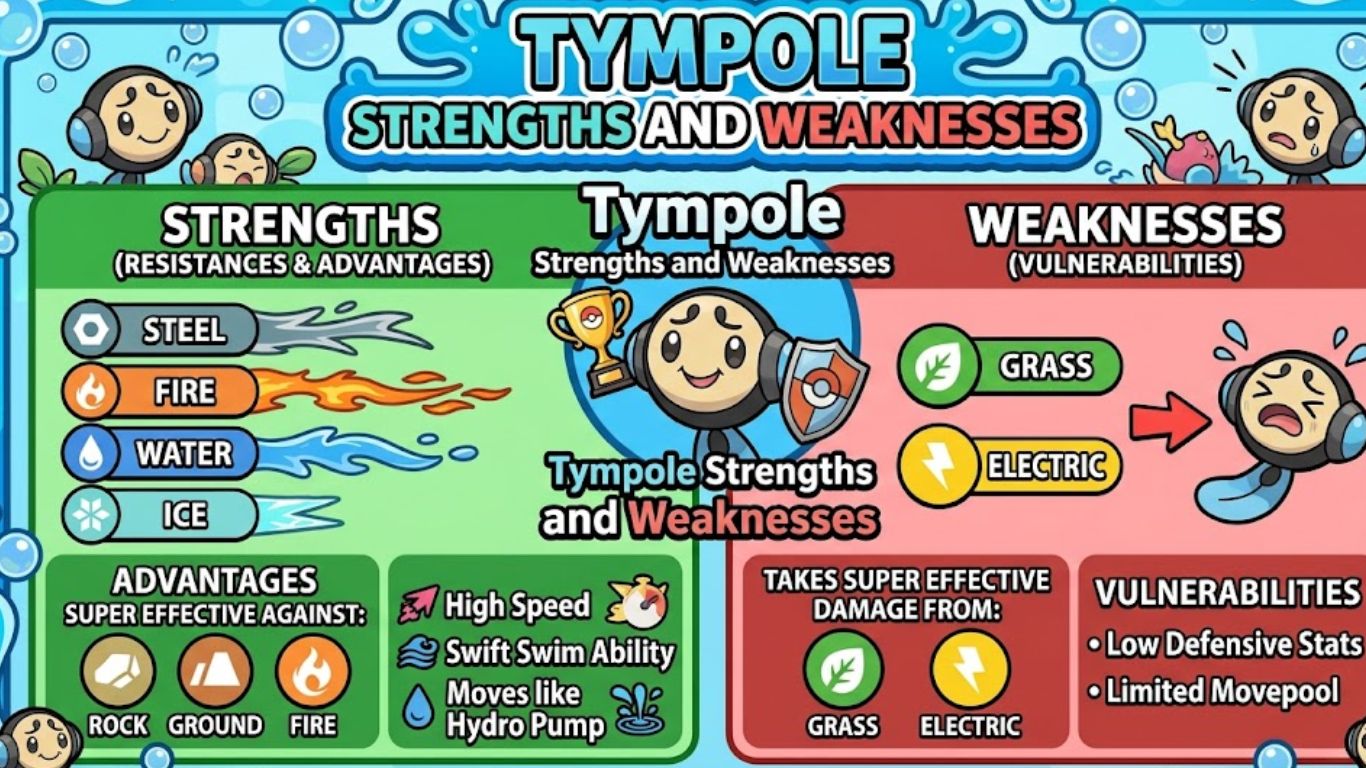
Strengths
- Strong evolution line
- Excellent rain synergy
- Versatile abilities
- Good defensive typing after evolution
- Learns diverse moves
Weaknesses
- Vulnerable to Grass attacks
- Average stats before evolving
- Requires patience to reach full potential
Like planting a seed and waiting for a tree to grow, investing in pays off over time.
10. Anime and Game Appearances
has appeared in both the Pokémon anime and numerous video games.
Its playful behavior and aquatic lifestyle often make it part of memorable episodes involving rivers or lakes.
Players have encountered Tympole in:
- Pokémon Black and White
- Pokémon Black 2 and White 2
- Pokémon GO
- Pokémon Sword and Shield expansions
- Pokémon Scarlet and Violet through transfers and compatibility features
Its continued appearances demonstrate lasting popularity.
11. Competitive Potential
Although itself rarely appears in competitive formats, its final evolution has carved out a respectable niche.
Seismitoad’s combination of Water and Ground typing provides:
- Electric immunity
- Wide offensive coverage
- Rain team compatibility
- Reliable bulk
Many competitive trainers appreciate its flexibility.
Starting with Tympole can therefore become the beginning of a strategically valuable team member.
12. Fun Facts About Tympole
Here are some interesting details you may not know:
- The bumps on its head create underwater vibrations.
- It resembles both tadpoles and speakers.
- Its design references hearing and communication.
- It belongs to Generation V.
- It evolves into one of the few Water/Ground Pokémon available.
- Its cheerful appearance contrasts with its eventual battlefield strength.
These little details make Tympole surprisingly memorable.
13. Why Trainers Love Tympole
Why do so many people enjoy using Tympole?
Part of the answer lies in its transformation. Watching a tiny tadpole become a towering amphibian creates a satisfying sense of progress.
Its adorable design appeals to collectors, while its final evolution rewards competitive-minded players.
It offers both charm and practical value—a combination that many Pokémon fans appreciate.
Frequently Asked Questions
1. What type of Pokémon is Tympole?
Tympole is a pure Water-type Pokémon before evolving.
2. At what level does Tympole evolve?
It evolves into Palpitoad at level 25 and then into Seismitoad at level 36.
3. What abilities can Tympole have?
Its abilities include Swift Swim, Hydration, and the hidden ability Water Absorb.
4. Is Tympole good in battles?
While its early stats are average, its evolutions become significantly stronger and can perform very well in many battle formats.
5. Why does Tympole have bumps on its head?
The circular bumps generate vibrations that help it communicate underwater and can affect opponents, making them an important part of its unique biology
Conclusion
Tympole may begin as a small aquatic Pokémon, but it represents much more than a simple Water-type creature. With unique sound-based abilities, clever design inspiration, reliable evolution, and strong strategic potential, it has earned its place among the memorable Pokémon introduced in Generation V.
Whether you’re exploring Unova for the first time or building a competitive roster, deserves serious consideration. Sometimes the smallest beginnings lead to the greatest achievements, and Tympole is proof of exactly that.


